
How to Choose the Right Outdoor Gear: A Complete Guide for Everyday Adventures
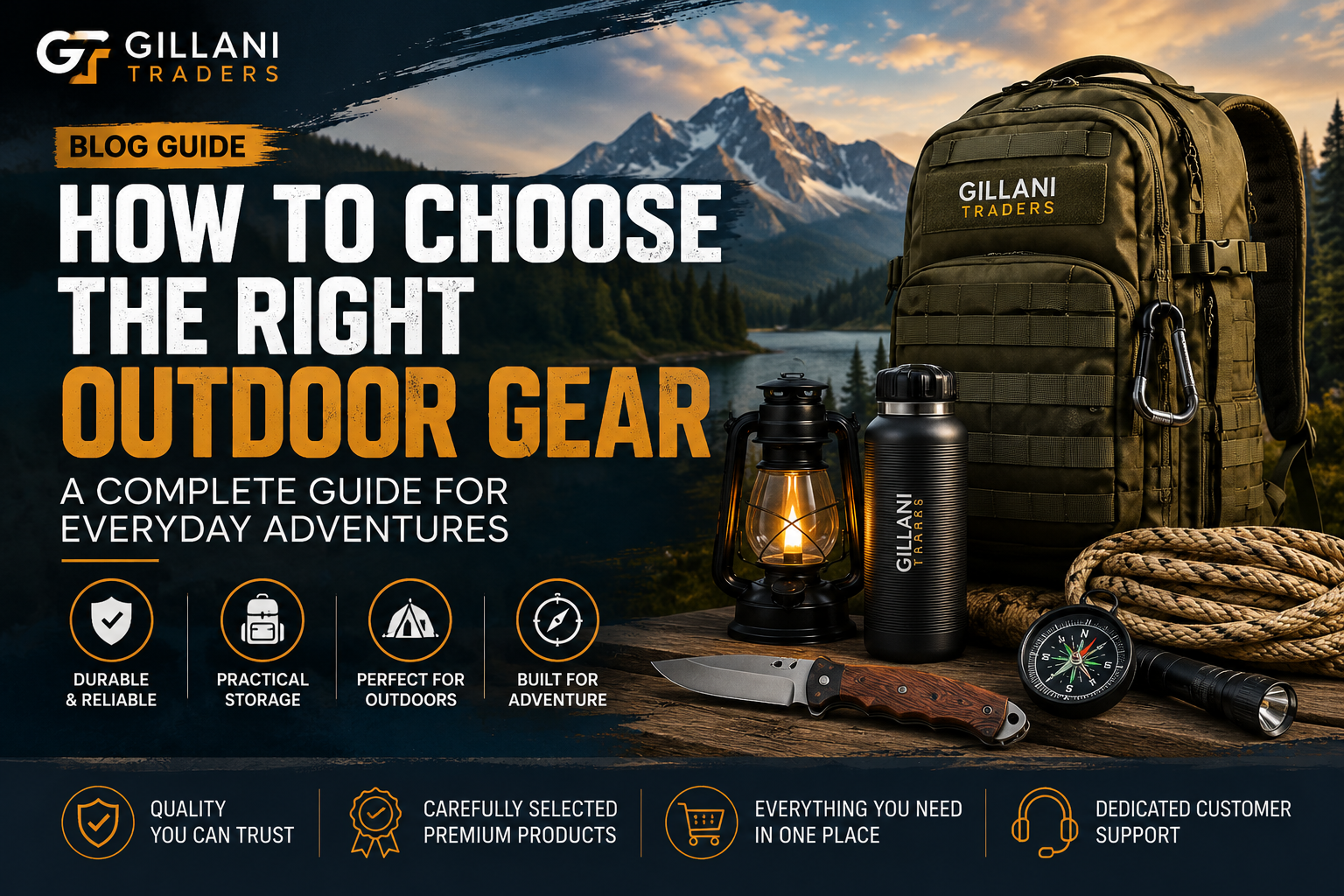
Choosing the right outdoor gear can make camping, fishing, hiking, and everyday activities more comfortable and organized. Whether you’re planning a weekend trip, spending time outdoors, or purchasing practical equipment for regular use, having suitable gear makes preparation easier.
Outdoor products come in different materials, sizes, designs, and price ranges. Understanding these differences helps you select equipment that fits your activities and budget. Instead of focusing only on appearance or price, it’s important to consider durability, comfort, functionality, and maintenance.
At Gillani Traders, we believe that understanding your equipment is an important part of making better buying decisions. This guide covers the essential factors to consider when choosing outdoor gear, bags, camping accessories, fishing equipment, and everyday tools.
1. Identify Your Outdoor Needs
The first step in choosing outdoor gear is understanding where, when, and how you plan to use it. Different outdoor activities require different equipment, and selecting products based on their intended purpose can help prevent unnecessary spending.
For example, a short camping trip may require only basic supplies, while an extended outdoor adventure could involve additional clothing, storage, shelter, and weather protection. Similarly, equipment used occasionally may have different requirements from items used every day.
Before purchasing outdoor gear, consider these factors:
- Purpose: Identify the activity for which you need the equipment.
- Frequency: Consider whether you will use it occasionally or regularly.
- Portability: Check whether the item is easy to carry and transport.
- Storage: Make sure it fits your available storage space.
- Weather conditions: Choose materials suitable for the expected environment.
Understanding these requirements helps you focus on products that provide practical value for your activities.
2. Check Materials and Build Quality
Material quality has a direct impact on how outdoor equipment performs during regular use. Well-constructed products are generally easier to maintain and better suited to the conditions for which they were designed.
Outdoor bags, for instance, may feature reinforced stitching, durable zippers, adjustable straps, and weather-resistant fabrics. Camping accessories and outdoor tools may use corrosion-resistant components or materials designed to handle specific environmental conditions.
When comparing products, pay attention to their construction, material specifications, and manufacturer recommendations. Also, consider whether replacement parts or maintenance supplies are readily available.
A higher price doesn’t always mean better quality. The most suitable option is one that offers the features and durability required for your intended use.
3. Choose Outdoor Bags With Suitable Storage
Outdoor bags help keep personal belongings, accessories, and essential equipment organized during travel and outdoor activities. Choosing the right bag depends on how much you need to carry and how frequently you plan to use it.
A well-designed bag should provide enough storage without becoming unnecessarily heavy or uncomfortable. Compartments, adjustable straps, and accessible pockets can also make a difference during longer trips.
Important Features to Consider
- Storage capacity: Select a size that accommodates your necessary belongings.
- Compartments: Multiple pockets help organize smaller items.
- Carrying comfort: Padded straps and adjustable fittings support comfortable use.
- Material quality: Consider fabrics suitable for your expected conditions.
- Accessibility: Secure closures and convenient pockets make everyday use easier.
Checking a bag’s dimensions and weight before purchasing can help you avoid products that are too large or too small for your needs.
4. Select Camping and Fishing Equipment for Your Activities
Camping and fishing require preparation, particularly when activities involve changing weather conditions, unfamiliar locations, or extended periods outdoors.
For camping trips, begin with basic requirements such as shelter, suitable clothing, lighting, drinking water, and first-aid supplies. Additional equipment should depend on the location, trip duration, and expected conditions.
Fishing equipment should be selected according to the fishing environment, intended activity, and applicable local regulations. Product descriptions and manufacturer guidelines can help you understand which accessories are appropriate.
Check Equipment Before Every Trip
Inspect your camping and fishing supplies before leaving home. Look for damaged components, missing accessories, worn materials, and items that need cleaning or replacement.
It’s also important to check local rules, weather forecasts, and any restrictions that may apply to your destination.
Carrying the right essentials is more useful than packing equipment you may never need.
5. Understand Outdoor Knives and Practical Tools
Outdoor knives and other practical tools are manufactured for different tasks. Their designs, materials, handling requirements, and maintenance needs can vary depending on their intended applications.
For example, kitchen knives are designed for food preparation, while certain camping tools are intended for specific outdoor maintenance activities.
Understanding these differences can help you select equipment that matches its stated purpose.
Features Worth Reviewing
- Intended use: Read the manufacturer’s product description carefully.
- Construction: Check the listed materials and build specifications.
- Handle design: Consider the grip, dimensions, and handling requirements.
- Storage: Look for appropriate protective covers or secure storage options.
- Maintenance: Follow recommended cleaning and care instructions.
Sharp tools should always be handled carefully and stored securely when not in use. Before purchasing or carrying any restricted item, check the laws and age requirements applicable to your location.
6. Compare Product Quality and Overall Value
Price is an important consideration, but it shouldn’t be the only factor influencing your decision. A lower-priced item may not offer the durability, features, or suitability you need.
Comparing products based on their specifications and expected use provides a better understanding of their overall value.
Before placing an order, review the following details:
- Product dimensions, weight, and materials
- Available features and included accessories
- Manufacturer care and maintenance instructions
- Shipping charges and estimated delivery times
- Return and refund policies
- Warranty coverage, where available
- Relevant customer feedback
Reading this information carefully can help you select equipment that matches your expectations and avoid unnecessary purchases.
7. Prioritize Safety and Responsible Equipment Use
Safety is an important part of selecting, using, and maintaining outdoor equipment. Every product should be used according to its intended purpose and the manufacturer’s instructions.
Inspect equipment regularly and avoid using items with damaged or worn components that could affect safe operation. Store sharp tools and other potentially hazardous products in secure locations away from children and unauthorized users.
Some outdoor products may also be subject to legal restrictions concerning ownership, carrying, transportation, and use. These requirements can vary depending on your location.
Always review applicable regulations before purchasing restricted equipment. Proper storage, regular maintenance, and responsible handling help support safer everyday use.
8. Follow a Simple Outdoor Gear Buying Checklist
A clear shopping checklist can make it easier to compare products and select equipment without overlooking important details.
Before purchasing your next outdoor item, follow these steps:
- Identify the activity and intended purpose.
- Set a realistic budget.
- Compare product materials and specifications.
- Check dimensions, weight, and portability.
- Review available storage and organization features.
- Read the manufacturer’s usage and maintenance instructions.
- Check shipping, warranty, and return policies.
- Confirm any applicable legal requirements.
Following these steps helps you make more informed purchasing decisions and focus on equipment that meets your actual needs.
Outdoor Gear and Everyday Essentials at Gillani Traders
Gillani Traders offers a range of outdoor equipment and practical products for different activities and everyday requirements.
Our product categories include outdoor gear, camping and survival accessories, fishing tools, bags, sporting goods, and various utility products. Each category provides options with different designs, materials, and features to consider.
Customers can browse the available collections, review individual product descriptions, and compare specifications before deciding which items suit their needs.
Whether you’re organizing equipment for a weekend trip or selecting practical accessories for regular use, Gillani Traders provides product information to help you evaluate available options.
Final Thoughts
Choosing the right outdoor gear starts with understanding your activities, environment, and personal requirements. Suitable equipment should offer practical features, manageable storage, appropriate materials, and dependable construction for its intended purpose.
Taking time to compare specifications, review maintenance instructions, and understand product limitations can help you avoid unnecessary purchases.From camping and fishing equipment to outdoor bags and practical tools, the best choice is equipment that fits your needs, budget, and expected conditions.
With careful planning and informed product comparisons, you can prepare for everyday activities and outdoor adventures with greater confidence.